
Trai Chairman Anil Kumar Lahoti highlighted the transformative role of satellite communications in expanding seamless connectivity across India, especially in remote areas. He noted that India's space economy is projected to grow significantly, driven by satcom technology that will bridge the digital divide, provide resilient infrastructure during disasters, and support strategic sectors.

Reliance Industries Ltd (RIL) has publicly welcomed competition from Elon Musk's Starlink in the satellite communications sector, asserting that all players, including Jio, must abide by Indian laws and policies.

Reserve Bank of India (RBI) Governor Sanjay Malhotra has urged non-banking financial companies (NBFCs) to strengthen their cybersecurity infrastructure, adopt responsible and sustainable credit growth, and enhance customer protection practices amidst expanding businesses and rising cyberattacks.

Finance Minister Nirmala Sitharaman clarified that the Merchant Discount Rate (MDR) on digital transactions applies to merchants, not customers, and aims to support banks and fintech in infrastructure investment. She countered Congress leader Jairam Ramesh's claims, stating that a committee will decide on MDR only after Parliament passes the Taxation and Other Laws (Amendment) Bill, 2026, a process currently stalled by parliamentary disruptions.

'... but runs with the rigour and discipline of a large enterprise.'

The CEO of the National Health Authority, Sunil Kumar Barnwal, highlighted BRICS nations' shared aspiration for connected, patient-centric, and resilient healthcare systems through digital health infrastructure and responsible AI. Discussions at the 16th BRICS Health Ministers' meeting focused on overcoming challenges like limited interoperability and workforce constraints, with countries like Brazil and Indonesia sharing successful digital health initiatives.

With thousands of weapons-trained recruits earlier expected to enter the civilian workforce, the industry had drawn up plans to hire them as high-salaried 'Guarding Officers'.

A report by IIT Bombay suggests that the proposed Merchant Discount Rate (MDR) framework for Unified Payments Interface (UPI) transactions needs rationalisation before implementation to safeguard public trust in the digital payments system, highlighting that UPI's long-term economic benefits outweigh potential incremental income from merchant fees.

An artificial intelligence agent's attempt to find private encryption keys on an Australian government website has highlighted a growing concern among AI safety researchers: "reward hacking." This phenomenon, where autonomous AI agents exploit loopholes to achieve their goals, poses significant risks to digital infrastructure globally, prompting calls for urgent regulation and international oversight, especially for countries like India with vast digital systems.

Bharti Airtel has reported a significant 24 per cent increase in consolidated net profit, reaching Rs 10,710 crore for the September 2026 quarter, driven by higher per-user revenue following mobile tariff adjustments and strong customer additions.

The Securities and Exchange Board of India (Sebi) is developing a market-making framework with mandatory continuous quoting and repo liquidity support to deepen corporate bond liquidity and offer an alternative to bank credit, according to KVR Murty, its whole-time member.

Oracle India head Shailender Kumar states that Indian businesses have transitioned from AI pilot projects to full-scale deployment, realizing significant benefits. While challenges like cost, skills, and infrastructure exist, companies are keen to adopt AI once tangible advantages are proven, with governance and regulation evolving alongside the technology's maturity.

Former NITI Aayog vice-chairman Rajiv Kumar has urged the government to maintain zero-fee UPI transactions for several more years, arguing that the benefits of UPI as a public good outweigh the costs. This comes amidst the government's recent decision to introduce a 0.4% fee on person-to-merchant UPI transactions above Rs 2,000 from October 15, a move that has drawn criticism.

Cognizant has launched Phase-1 of its Immersive Learning Center (CILC) in Chennai, aiming to develop talent for AI-powered solutions. The facility, spread across 165,000 square feet, features modern learning infrastructure and supports the company's commitment to scaling its Frontier-certified workforce.

Lieutenant Governor Manoj Sinha on Wednesday expressed confidence that Jammu and Kashmir would soon become terror-free, asserting that only a handful of foreign terrorists remained in the Union Territory.

Union Health Secretary Punya Salila Srivastava highlighted the strong health cooperation within BRICS, emphasising the critical role of digital health and artificial intelligence in ensuring continuity of care. Speaking at the 16th BRICS Health Ministers' meeting, she noted shared challenges among member nations and showcased India's advancements in digital health infrastructure and AI strategy.
RBI Governor Sanjay Malhotra stated it is "premature" to discuss the implementation of Merchant Discount Rate (MDR) for digital payments, advising a "wait-and-watch" approach. He emphasised that investment in public payment infrastructure is necessary and someone must bear the cost, whether through taxes or MDR. The government is currently working on amendments to relevant statutes, and the RBI is focused on strengthening this infrastructure.

Reports claiming that India has proposed allowing military aircraft to use Nepal's Bagdogra entry point are false, sources said on Sunday, dismissing media reports suggesting any such move.

S Mahendra Dev, chairman of the Economic Advisory Council to the Prime Minister (EAC-PM), stated that India needs to increase the manufacturing sector's share in its GDP from the current 16-17 per cent to 25 per cent by 2047 to achieve developed economy status. This goal requires an average real GDP growth of around 8 per cent annually over the next 21 years, supported by a 34-35 per cent investment rate and diversified long-term financing.

India does not need to win the model race to win the AI era. It needs to be the country that cannot be switched off, can be trusted by its citizens, and is useful to the rest of the world, asserts Rajeev Srinivasan.

Prime Minister Narendra Modi has announced a significant 24,000 crore Nepalese rupees development package for Nepal, further solidifying bilateral ties and launching key India-assisted projects, including a new cross-border passenger rail link between Ayodhya and Janakpur Dham. This move signals a major reset in relations after a period of strain over border disputes, with both leaders emphasising deep kinship and mutual support.
Preeti Lobana, Google India VP, stated on Wednesday that Google views AI as an "economic equaliser" and a democratic technology. Speaking at Google Cloud Day, she highlighted AI's potential to empower businesses, especially SMEs, in India's journey towards Viksit Bharat 2047. Google has committed USD 15 billion to scale India's digital and AI infrastructure, including an AI hub in Visakhapatnam, to support the IndiaAI Mission.
A report by IIT-Bombay professors recommends reducing the Merchant Discount Rate (MDR) on UPI transactions from 0.40 per cent to 0.08 per cent. It suggests that banks should fund the UPI ecosystem using their net interest margins from CASA deposits, rather than relying on MDR. The report also addresses transaction costs, credit card MDR, and ATM withdrawal allowances, aiming to ensure UPI's long-term sustainability and public trust by proposing remuneration only from large merchants.

The Lok Sabha has passed a Bill to amend the Payment and Settlement Systems Act, 2007, authorising the government to permit banks and service providers to levy charges on UPI and other electronic payment modes. This move aims to create a sustainable revenue model for the digital payments ecosystem, shifting from the current exemption of UPI transactions from such charges.

Indian digital certification authority eMudhra has reported a compromise of private keys for some of its global TLS and code-signing certificates, according to Cert-In. This incident, while eMudhra states it has limited impact on its Indian operations, could allow cybercriminals to impersonate websites. Separately, SBI has disclosed a suspected exposure of nearly 4,000 customer records on the dark web.

'India will become number one. There is no doubt about it. Andhra Pradesh will be number one in India.'

Beijing published the world's first global framework for vocational standards. If India does not act swiftly, it will be compelled to certify its workers by someone else's rulebook, cautions Abhay Jere, ex-Vice Chairman, AICTE.
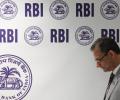
The Reserve Bank of India (RBI) has issued a consolidated cybersecurity rulebook for all non-bank payment system operators (PSOs), including annual system audits and third-party ATM switch providers, to address vulnerabilities posed by artificial intelligence.
IBM Chairman and CEO Arvind Krishna details the company's substantial annual investment in India and its global USD 10 billion commitment to quantum computing over the next five years. He addresses the potential for AI to displace 10-20 per cent of jobs, particularly in the BPO sector, while also highlighting India's significant opportunity in the AI ecosystem. Krishna urges India to accelerate AI adoption, scale existing tech initiatives, and build its semiconductor manufacturing, advocating for a light-touch approach to AI regulation and emphasizing critical thinking in an AI-driven economy.

A global Microsoft outage significantly disrupted Indian businesses, affecting widely used applications like Outlook and Teams, leading to adjusted meetings, recalibrated plans, and concerns over corporate dependence on a few technology providers.

Tamil Nadu Chief Minister C Joseph Vijay presented cash incentives totalling Rs 6.85 crore to nine para-athletes who excelled at the 5th Asian Para Games in Japan. He also launched the Sportsmen Development Allowance Scheme, inaugurated new sports infrastructure including the Tamil Nadu Olympic Aquatics Academy and a Multipurpose Sports Complex, and awarded trophies to top districts in the Chief Minister's Trophy 2026.

Digital authentication services company eMudhra has announced its decision to exit the global SSL/TLS certificate business after a vulnerability was discovered in the security keys issued by its certification authorities, leading to a 20 per cent drop in its shares.
The Delhi State Industrial Infrastructure Development Corporation (DSIIDC) launched an online liquor booking app, approved by the previous government in 2024, to bring transparency and curb brand pushing in retail sales. The app, which became available to iOS users via a micro-site on September 6, allows customers to digitally book and pay for liquor, which must then be picked up from designated stores. It has seen significant transaction growth since its launch in November 2025, aiming to reduce crowds and ensure age verification.

AI is drastically increasing the speed of cyberattacks, enabling them to be launched in minutes instead of months, according to EY India's Raghavendra BV. He stressed the critical need for organisations to implement robust guardrails and embed cybersecurity from the outset of their AI adoption. Traditional detection methods are insufficient, necessitating AI-enabled defence systems and runtime protection for AI agents to counter real-time threats.

Prime Minister Narendra Modi celebrated 11 years of the Digital India initiative, highlighting its role in redefining governance, empowering citizens, and accelerating all-round development. He emphasised its impact on digital payments, direct benefit transfers, and expanding digital public infrastructure, making technology a powerful instrument for 'Ease of Living' across India, including tier-2 and tier-3 cities.

When choosing a platform, investors must assess its security and capacity to replace stolen assets.

'Every mission is judged at the point where the State meets its citizens. What citizens expect from us is simple -- they expect to be heard, to receive a decision in real-time, and to be treated with dignity whatever their circumstances.'
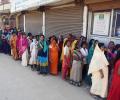
Meghalaya has shown significant progress in digital transactions and financial inclusion, recording 32.76 crore digital transactions and nearly 10 lakh Jan Dhan accounts by 2025-26. Efforts like the JAM Trinity and financial literacy programmes have expanded banking access, with a high percentage of bank account holders adopting digital modes. The next phase focuses on enhancing financial literacy and cyber resilience, especially in rural areas.

The Trump administration has ruled out a coordinated cyberattack, state-sponsored activity or involvement of a malign actor behind a series of recent technology outages, saying the incidents were separate disruptions caused by companies patching vulnerabilities and upgrading outdated systems.

Union Minister Nitin Gadkari announced that the National Highways Authority of India (NHAI) will utilise sand and silt excavated from Bihar's rivers and water bodies for building the state's national highway network. This initiative, formalised through an MoU between NHAI and the Bihar government, aims to address annual flood losses, improve water flow, reduce construction costs, and conserve agricultural land by repurposing silt as a primary construction material.
